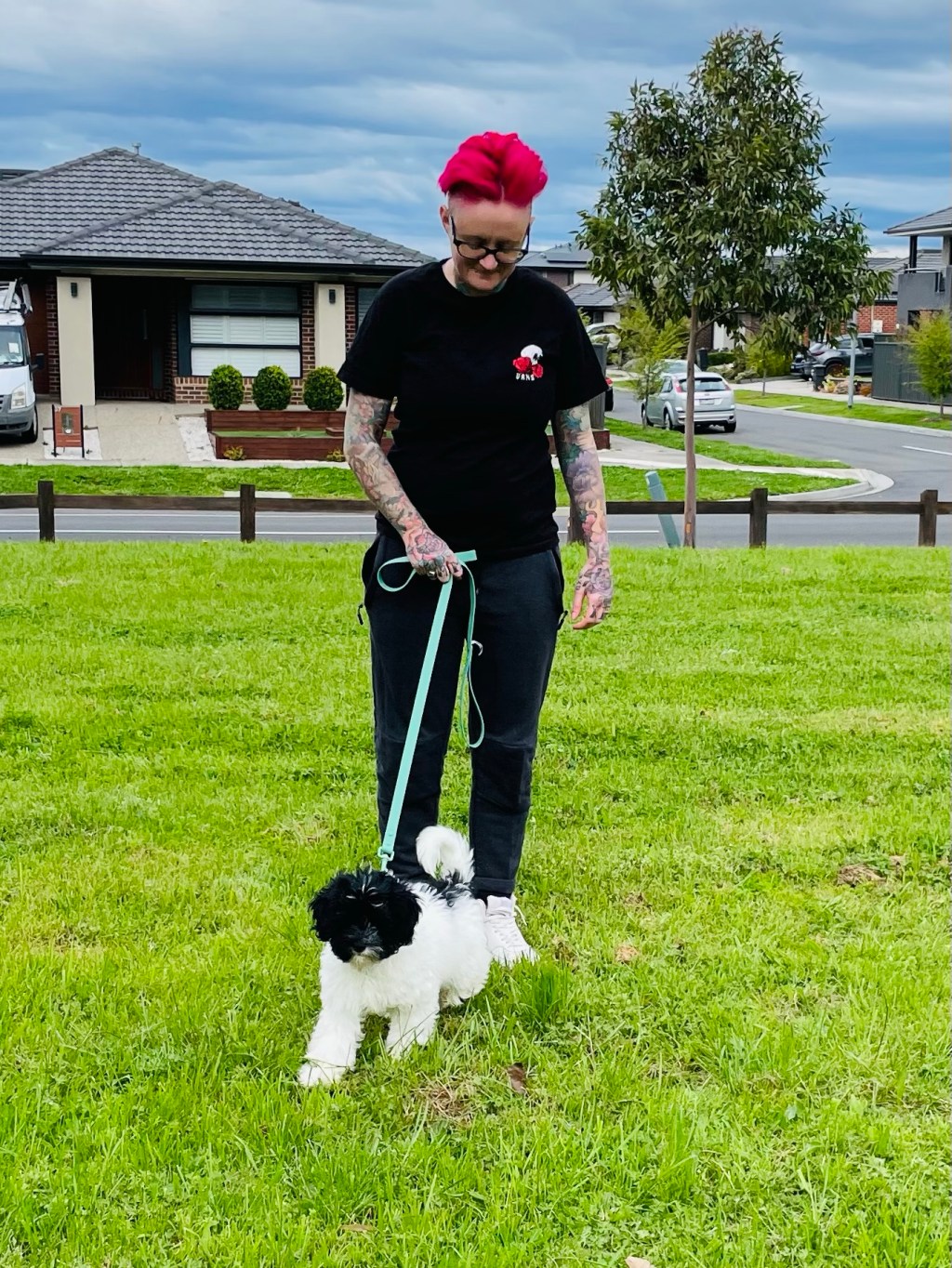
Hey, just wanted to share that I have ADHD, which is attention deficit hyperactivity disorder.
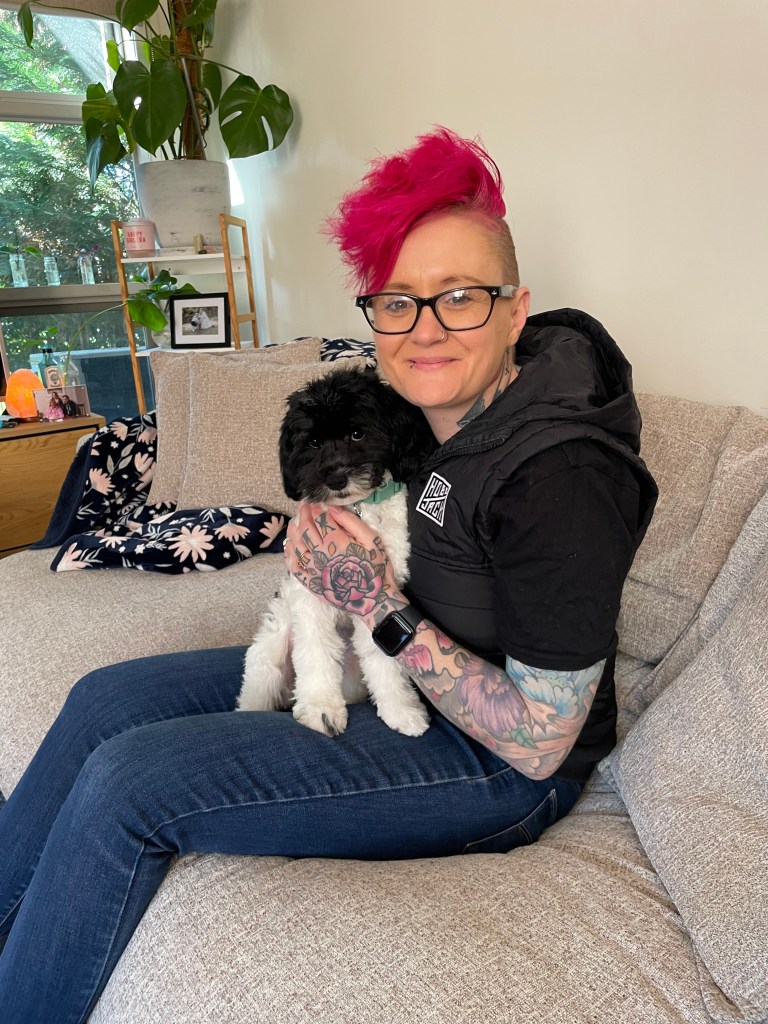
I truly believe it’s essential for people to recognize this: as a 39-year-old woman who enjoys dressing like I’m in my early 20s, I bring a playful spirit to life! I love to joke around and often find myself speaking a bit faster than I realize, as my energetic mind races ahead with excitement.
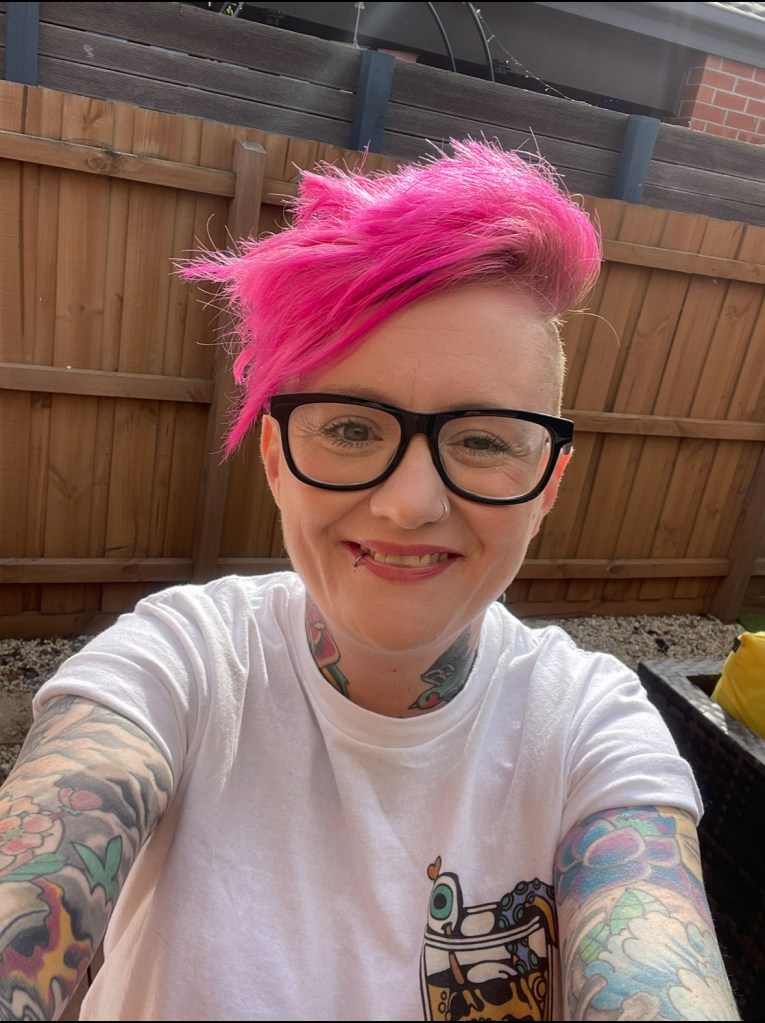
So, with all that going on—along with a bunch of other stuff—writing my story was really tough.
Right now, you see me as a walking, talking, funny, slightly quirky person. But let me tell you, I’ve had my fair share of struggles in life. It wasn’t until I started writing this that I really started to process everything I went through for what felt like forever.
Nobody just wakes up one day and decides, “Hey, I’m going to be mentally unwell today.”
These feelings don’t just pop up out of nowhere; they build up over time.
That’s a big lesson I learned from my life experiences. I figured out that when I ignore what’s going on in my head, I’m basically ignoring who I am.
I grew up in the eastern suburbs of Melbourne, the youngest of four in a family that looked really happy from the outside. No divorces, no financial struggles, no violence—just what you’d call white “normality.”
But as a kid in the 90s, I never really fit into that “normal” box.
Going through a mental health journey from such a young age makes it hard to remember everything, but I do know I was a sensitive, super funny, and hyperactive kid. Most people thought that was pretty odd, especially since back then, “mental health” wasn’t a term you heard a lot. The stigma around it was heavy.
Looking back now, after spending so much time trying to understand my own mental health, the signs that I was struggling were super clear. I had my first panic attack around the age of 10.
Even now, I find big social gatherings a challenge. But back then, I had no clue what social anxiety was. Just hanging out with friends would make me super anxious—my stomach would turn, my hands would shake, and my thoughts felt like they were running a hundred miles a minute.
To bring this into perspective, and I might show my age here – some of you may know that song by Eminem – “lose yourself”? Or at least You’ll probably know this lyric “his palms are sweaty, knees weak, arms are heavy, there’s vomit on his sweater, moms spaghetti” – that was basically what was happening.
Because I didn’t know what was happening but was also ashamed of how I felt and reacted, I would try and distract situations. I was a pretty disobedient kid (I still am today)
But back then, I would act out in such a rebellious way that teachers, parents – either my own or my peers parents or bystanders would feel the need to physically remove me from situations. When I say rebellious I mean loudly and psychically uncontrollable.
I want to make it clear, I was never a violent person, I’m still not – but in those moments of sheer frustration at my own mind I would pull lockers down from walls, kick over desks, throw random science artefacts out the school window.
As a result, More often than not I found myself spending a lot of time in detention, suspension or, once, psychically dragged from the classroom, up a corridor all the way to our coordinators office.
None of these things were ever helpful to me. Ever. They only made me more frustrated at my own mind. No one ever asked if I was ok, it was just seen as an annoyance. I was ignored rather than checked in on.
During all of this, at a young age I found myself trying alcohol and realising it took the edge off. By the time I was about 17 I had been drinking at school, at home, at any opportunity because it made me feel ok. I felt normal.
When you find yourself in a circle of addiction, you become an excellent performance artist to keep anyone wondering if you were maybe heading in a bad direction. My performances were so impressive that I lead a successful life in my 20’s.

On the surface, during the light of day – I was a confident, sassy, successful woman. I travelled the world & built a career from scratch in corporate financial management.
A career no one expected given I failed significantly at maths during high school but found an interest in later in life. I found numbers interesting because numbers don’t judge, they don’t lie and they can’t be misinterpreted. Numbers were safe. I was safe.
But as soon as I got home from work, I would start to worry. Every interaction & conversation from the day, regardless of the outcome, I obsessed over until I found myself in states of panic and anxiety, overwhelmed and confused. I didn’t know how to ask for help so I found help in substance misuse, and some pretty bizarre behaviours.
By the time I was in my 30’s my life became unmanageable. The feelings and thoughts I previously only felt in the evening crept into the day time – as did the behaviour I used to keep it away.
At work I began self medicating simply to walk in the office door. This continued throughout the day, right up until the moment I got home, where the behaviour would continue.
As mental health was starting to become a conversation around 2016, I do remember a few times people asking if I was ok, or if something was going on – but through self medicating- I didn’t feel anything was wrong. I actually felt nothing at all.
It wasn’t until I overdosed in the middle of the office on a Monday afternoon that the alarm bells started to ring. I was lucky to survive that day, however it took an incident so server for someone to finally ask “Jess, whats going on, you almost died”.
So, at 34 years old I knew now I had an issue with substances, but I had no idea what the real story was driving that behaviour.
I lost job after job due to similar behaviours, and it was in 2020 sat on my kitchen floor with nothing left in my life that all of the sudden I made a decision.
The first decision I felt like I had ever made – I decided I didn’t want to die.
Everyday for the previous 18 years all I wanted to do was not feel anything, but in that moment something changed. I changed.
In June of 2020 I somehow worked up the courage one day and visited a GP. A GP I hadn’t seen since I was a teenager.
That GP urgently referred me to a psychiatrist, one who actually listened to my life story and didn’t dismiss any of it.
As a result, That psychiatrist saved my life.
I was diagnosed with bipolar affective disorder, type one – which explained the risky behaviour and severe depressive episodes. I was diagnosed with Complex Post Traumatic Stress Disorder, which explained the periods of my life I could not remember and emotional reactions that were unexplainable. I was diagnosed with generalised and social anxiety, and finally – ADHD.
All of these diagnoses would feel overwhelming to most people – but to me, that day changed my life. There were all of the sudden reasons for the behaviour I displayed that made me hate who I was, the vicious cycle of addiction I found myself trapped in for almost 18 years to make that hate feel manageable.
All of the sudden I was not the person I thought I was.
I was a person who was not well, and I needed help.
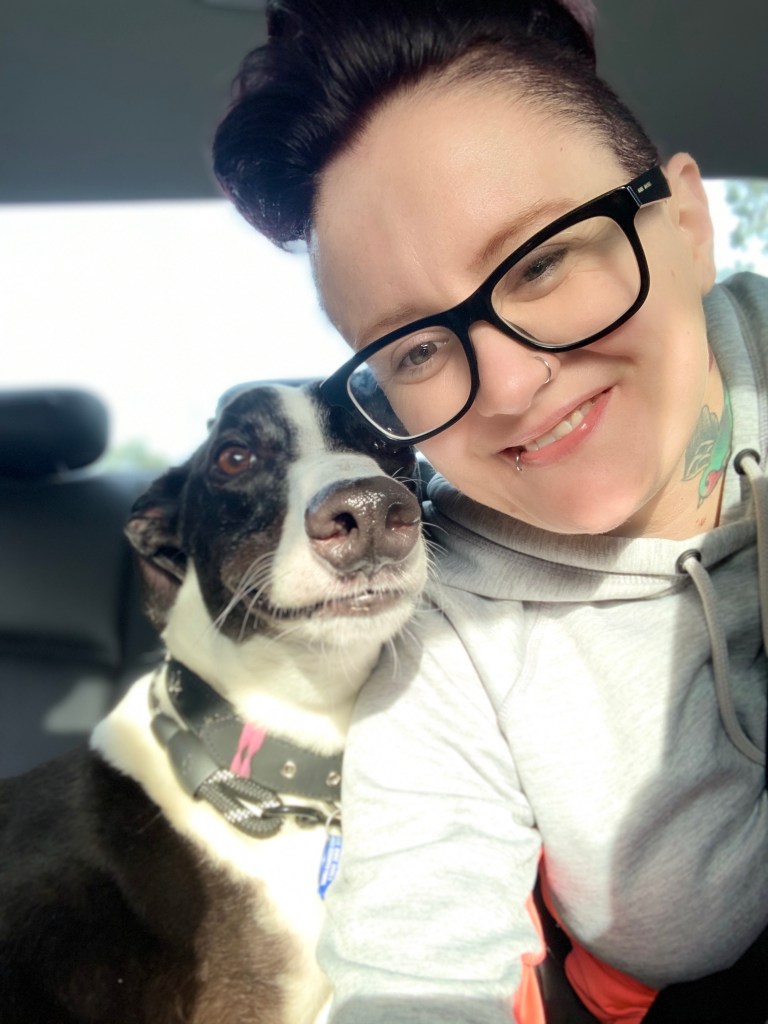
I knew that simply addressing my mental health with medication wasn’t going to be the 100% fix I needed to be better to stay better. Overtime I made a lot of changes. I began eating better, or eating at all is probably a better description. I started running, which is mildly hilariously because for most my life I said “I’m only running if it’s from a bear”. Whilst, clearly in Australia, we do not have bears, I just ran anyway.
I started running, which is mildly hilariously because for most my life I said “I’m only running if it’s from a bear”. Whilst, clearly in Australia, we do not have bears, I just ran anyway.
The mental health conditions I am diagnosed with don’t just come and go every few months. I don’t know what I would do with my spare time if they did, I have had to learn and educate myself around these conditions because they weren’t going anywhere, they were a life long gift.
Up until a few months ago I thought everything was going ok. However, I’d started to stop doing a lot of the things that I knew were helpful for me. I wasn’t running anymore, I was napping all day. I didn’t have a lot of energy outside of my ADHD so I sruggled to be ambitious or willing to do social things or even stay in touch with my friends and family. I was falling into a dark place but I didn’t actually see it coming. I learned how to mask my true self so incredibly well that I didn’t even notice I was slowly but definitely hitting a severe bipolar depressive episode.

For the first time in nearly 4 years, I found myself in such a state I needed to reach out for help, urgently. Reaching out for help for my mental health, as someone who is a mental health advocate and speaker was so mortifying to me that I stigmatised myself in the way I try to tell people not to do.
I always used to hear people bang on about sleep hygiene and how that had an impact on mental health. I had no clue what decent sleep actually felt like so I assumed it was some kind of weird thing people said. Yet today, I have a regiment sleep hygiene pattern that is borderline military in nature. With dimmer lights that turn off by 10pm, I go to bed at roughly the same time every night and I wake up at the same time every single day. As soon as I’m awake I have a shower, and as soon as I’m about to go to bed I have another shower. I then avoid screen time and doom scrolling tiktok, instead I shut my eyes and I basically fall asleep. It’s like some weird magic trick that has had such a significant impact on my recovery I cannot recommend it enough.
However, I did get the help that I needed. Whilst I’m still not 100% back to normal, I know each day things are getting better. Sometimes the little steps forward you make can feel like massive achievements and I spend time learning to be proud of myself.
I’ve actually turned into the kind of person I used to think didn’t understand mental health and thought “a glass of water and a brisk walk would do the trick”.
I tried that one day and to my absolute surprise – it helped. I actually felt better as I walked around outside in the mornings and I also felt very proud of myself for doing it. I make sure every day I go for two 30 minute walks.

With this ADHD brain there is no way I can sit there and meditate, but I have started to understand breathing techniques that help keep my anxiety at a bearable level, but mostly helps the anxiety not switch to a panic attack.
All of these super simple things I had always thought were a waste of time, are keeping me safe and healthy and in a place where I feel I am getting better.
But, most importantoy, I also have a wife. Let me assure you- there is no accountability enforcement stronger than the wife of a lesbian in recovery, its like living with a narcotics agents – but she is a wife who loves me despite my past and sees past my diagnosis. She fights on my behalf to get help when I can’t do it. I am very lucky and I have no idea how she puts up with me.
SO Today, whilst being on a first name basis with my pharmacist and seeing my psychologist weekly and GP weekly, and working hard to maintain the routine I have created for myself, I am getting better and I know the combination of both is going to be how I live my life happily.
So to finish, and as hard as the last few months and years in hindsight have been – I am a person who looks in the mirror and can say, with confidence and despite my mental health challenges- I love who I am.
And I will do everything I can to protect that for the rest of my life.
 We Should Not Discuss That - A Blog